
Heart Check

Recently my wife and I moved to a new house. If you’ve ever experienced the “joy” of moving, you know it can be a long and stressful process. All the boxes, the packing, and the aimless strolling through your home every morning to find the box that contains your socks and underwear… it can add up to pure madness. I know that I personally have doubled the amount of gray hair in my head over the past two months.

Packing up a house can also reveal unwanted surprises. Like when we moved our couch for the first time in two years only to find a variety of bullets in varying calibers (you have to understand my home for this to make sense), a plethora of candy wrappers, and a very questionable half-eaten Chick-fil-A fry. During our move, I constantly was asking myself, “Are we really this messy?”

Then comes the worst part… when everything is out of the house and all that’s left is cleaning up the aftermath. After scrubbing and sweeping with the help of extended family a realization finally set in: with more maintenance, the house would have been in much better condition. Now don’t get me wrong! I’m a tidy person! I like things to be clean and in place… but when you live in a space long enough all of those hard to get places get gross and you even become used to a certain level of mess.

As we transitioned into our new home I immediately felt the urgency (maybe even a little too much) to maintain our home and its cleanliness. I vowed to be intentional on a daily basis to faithfully steward our home, even in the things that aren’t visible. Mowing the grass, sweeping, mopping the floors, and dusting are now a regular thing that I treat as preventive maintenance, so that maybe next time we are moving and things get shuffled around we aren’t left standing in a messy room asking ourselves, “how did things get this bad?”

This same illustration can be applied to the heart of a Christian. Intentionality is important in maintaining the health of your own heart! There’s a reason Jesus stresses the importance of the heart so much in the Scriptures, because it’s the life and breath behind everything you do. Sadly, you may be able to fake things on the outside with the right answers or charisma but I believe that the Christian whose heart is far from God is of no value to the kingdom.

Take a moment to ask yourself a few questions:

  • What is your life like underneath the surface?
  • If you stripped away the surface, would your life reveal a heart that has a zeal and passion for God?

Nothing is more vital for our churches, our families, our spouses, the people we serve, and ourselves than for our hearts to be healthy. Here are four vital practices we must have in order to make sure our hearts are constantly chasing after God. These disciplines may seem simple, but they are crucial if we’re to avoid the pitfall of “talking the talk” without “walking the walk.” Matthew 15:8 puts it this way,

This people honors me with their lips, but their heart is far from me.

Let’s think together!


Drink from the Well

Psalm 119:105 says,

Your word is a lamp to my feet and a light to my path.

Be in the Word daily! While this discipline seems to be a no-brainer, it’s often overlooked amongst the many tasks, emails, jobs, and chores we have on our daily plate. In the hustle and bustle of your work life and home life often the importance and value of a daily intake of Scripture is lost.

To have any strength and maturity in your walk with Christ, our days have to start with the self-care of being in the Word. It’s truly that simple. The inspired Word of God is “living and active”

Hebrews 4:12 says,

For the word of God is living and active, sharper than any two-edged sword, piercing to the division of soul and of spirit, of joints and of marrow, and discerning the thoughts and intentions of the heart.

Daily Scripture gives us a constant and consistent reminder of who Jesus is, and what He’s done for us. Run to his Word daily, and drink from the well that never runs dry.


Sit at His Feet

When is the last time you stopped and just meditated on the Lord? If you are like me then you might struggle to recall when it last was. Sometimes we can get so caught up in serving the Lord and “working out our salvation” that we lose sight of what it is to be a Child of God all together.

We see a story that portrays this exact thought in Luke.

Luke 10:39 says,

And she had a sister called Mary, who sat at the Lord’s feet and listened to his teaching.

Most of us know the context of this story of Mary and Martha. Jesus enters the house of Martha and while she is consumed with serving, Mary just wants to sit at Jesus’ feet. It’s a familiar passage to most people but it’s easy to overlook the simple concept that sitting at the feet of Jesus through prayer is everything!

While God certainly calls us to do good works, he wants us to remember that we are his sons and daughters first. He wants us to spend time with him; he wants us to know and rely on him more. One of the ways we can pastor our own hearts away from self-reliance is by spending time with him through his Word and through prayer.


Stop and Listen

Exodus 20:8 says,

Remember the Sabbath day, to keep it holy.

One of the greatest detriments to our ministries and the people we lead is failing to rest from our work. I remember early in ministry I felt like I needed to be “on” at all times, even the weekends. This drove my wife insane and certainly didn’t help out our relationship or even my relationship with the Lord. Taking a Sabbath day for rest each week is not only a good practice but is a command of Scripture. You must have it… God designed it to be this way!

Use this day of rest to disengage from “work” and to refocus your heart and soul back on the Lord. Take time to stop and listen. This day of rest will recharge you, and remind your heart that whatever ministry tasks you have are under the sovereign hand of God. Pastor your heart well by obeying the regular rhythm to Sabbath.


Be in Biblical Community

Galatians 6:2 says,

Bear one another’s burdens, and so fulfill the law of Christ.

One of the best ways to grow as a believer is by being in a solid Biblical community. This may look different in your context, but you need to surround yourself with people who will walk alongside you in the Christian life. This includes people who you give permission to call out sin in your life and see your blind spots. Being in Biblical community is about being with people who know everything about you… your strengths, weaknesses, sin struggles, and pitfalls. It’s about constantly being “gospeled” by other people so that you’re growing in Christ-likeness. Take care of your heart by surrounding yourself with godly people and living in Biblical community.


While this is not an exhaustive list, these four practices will help to maintain a healthy heart and prevent the cobwebs that apathy and neglect create. Our churches need Christians who are diligent in pastoring their own hearts. May we be Believers who strive toward these disciplines with hearts aimed towards glorifying the risen Christ.

Kingdom First

Let me ask you a question…

What if the members of our churches started sharing their faith, but it wasn’t in a way that brought more people to our church? Would we celebrate and encourage that?

If not, we may not be as much about kingdom growth as we think we are.

We hear a lot today about church growth… and church growth is good. A healthy church should be growing just like a healthy person should grow. A healthy church cannot help but grow! Like any revival draws people from all over to it, genuine Spirit filled believers are drawn to a movement from the Lord.

A lot of churches are starting to evaluate every program and decision according to how much it helps the church grow. Are we too traditional? Too contemporary? Is our music too loud or too soft? Do we need a coffee bar, a younger more hip worship pastor, a funnier preacher?

Evaluation is good and healthy as long as we look at the big picture. The big picture that I am talking about is the Kingdom of God. Matthew 6:33 says,

But seek first the kingdom of God and his righteousness, and all these things will be added to you.

We do not seek his kingdom to get what we want, but as we seek first the kingdom of God our lives and ministry cannot help but grow.

Church growth cannot be the only reason we do what we do in our local churches. There is a much higher calling to grow the kingdom of God.

In the book Externally Focused Quest Rick Rusaw and Eric Swanson have a great discussion about the Kingdom. Here’s some highlights that may challenge your thinking:

How important is the kingdom? The word kingdom is mentioned 152 times in the New Testament and 116 times in the Gospels. By contrast, the word church is mentioned just three times in the Gospels – all in the book of Matthew. The first public words of John the Baptist and Jesus were to announce the kingdom (Matthew 3:2, 4:17). The first prayer request that Jesus taught his disciples was “Thy Kingdom come…” (Matthew 6:10). The first priority for the believer was to seek God’s kingdom (Matthew 6:33).


What is the kingdom? The kingdom of God is any place over which God has operative dominion. The kingdom is where the King is reigning. So if Jesus is reigning as king in your own life, “the kingdom of God is within you” (Luke 17:21).

In the book Liberating the Church Howard Snyder writes,

Kingdom people seek first the Kingdom of God and its justice; church people often put church work above concerns of justice, mercy, and truth. Church people think about how to get people into church; kingdom people think about how to get the church into the world. Church people worry that the world might change the church; kingdom people work to see the church change the world.

The church does not exist for itself. The church exists to proclaim and demonstrate that the kingdom is near.

So… what’s the difference between church thinking and kingdom thinking?

  • CHURCH: local, internal, evangelism the goal, programmed, gospel explained, Sunday, growing MY church.
  • KINGDOM: global, external, evangelism the starting point, organic, gospel lived out, Every day, growing THE church.

Jesus said in the great commission to go into all the world and make disciples. Those people that need to be reached and discipled in all the world don’t just include people from our local communities that will attend our local churches.

As people use social media to make new relationships and keep in touch with friends who have moved away, more aspects of our lives are happening without regard to geography. From crying with a friend going through a divorce, to celebrating the joy of childbirth, many of our most intimate moments are being lived through Facebook Live, Skype, YouTube, Instagram, Twitter, and FaceTime.

More people who share their faith are doing it online, too. Which means that the friends and family members they’re sharing it with are becoming less likely to be able to attend church together.

These recent nuances in connectivity and communication provide great potential for our church’s participation in kingdom growth, even if it doesn’t always result in the numerical growth of our local congregation.

I love the mindset of the senior pastor I work under. When he is asked about programs we could add like youth sports, Celebrate Recovery, etc… he normally redirects the conversation to a local church in our area that does that particular ministry with excellence and says, “Why would we try to compete with another ministry in our area instead of just sending people to that ministry to be nurtured?”

Sometimes our evangelism and discipleship can end up with us encouraging someone to follow Jesus to another church!

In the western church world, we have become so used to tethering evangelism to our church’s programming and attendance that we can forget they’re not the same thing.

NEWSFLASH: Church attendance isn’t the goal of evangelism. Following Jesus is the goal.

What if a church was teaching and practicing evangelism in such a way that people shared their faith in Jesus at work, in their neighborhoods, with their families and online, not only as part of a church program, but as a natural outgrowth of their faith? We must always remember that, while church attendance is a vital element in our spiritual growth, church attendance isn’t the goal of evangelism. Following Jesus is the goal – even if it means they attend a different church than ours!

We must remember that Jesus didn’t call us to make congregation members… He called us to make disciples. Making disciples comes first!

Let’s focus on the Kingdom and be just as happy when someone comes to Jesus and attends another good church as we are when they attend ours. It’s great when a church member invites an unchurched friend or family member to come to church with them. But it’s even better when that person invites someone to follow Jesus with them. People need to know we’re concerned about them more than our church’s bottom line. The kingdom of God is always bigger than our little corner of it.


Set the Table

A couple of months ago my wife and I got to do a couple of longer hikes in the Rocky Mountains. To save money and time, we decided to pick up Subway sandwiches on our way each day and eat them in the car before hitting the trails. It was so much fun eating sandwiches and other, primarily unhealthy, snacks picnic-style because there was fresh air, a beautiful view, my wife, and no real expectations or civilized rules regarding how or what I ate. I didn’t have to eat my sandwich before my gummy bears, keep my elbows off the table, or use my forks in the correct order… I mean how many forks can a person possibly need to eat a meal?

Another memorable meal was when I was in college. As a Public Relations class heading towards graduation we went to a conference to rub elbows with some possible future employers, and “professionals” in the field. After that conference there was an elaborate meal with waiters, multiple courses, fine dishware, and tons of utensils. The etiquette and expectations were high and completely different than my previous example.

As a kid we didn’t get out the classy dishware often, probably because my mom was afraid we would break it, and we would, or maybe because we didn’t have any? I’m not sure… but both of those examples paint a picture of my point, the way the table is set can determine the expectations for the meal.

Think about it! The dishware is not the reason you sat down at the table… the food was! But the place settings can determine the context and direction the meal will take.

As worship leaders, we set the mood for what is expected for the worship experience for the majority of the congregation. Obviously, there will always be those who are bold or mature in their faith who we don’t need to bring to the throne because they are already there. But for the majority of the church, we set the table and the layout for what is generally expected during a worship service. We can be the examples of what kind of worshipers we are called to be. I know that a meal with fine china versus a picnic will have two different moods… both are fine and enjoyable, but different. In the same way, a small group setting with an acoustic guitar has a much different feel than a Sunday morning service with a full band. Both are great and both can be incredibly powerful times of worship, but they are different styles. The table for each scenario is set differently.

As Pastors and leaders we are called to do the prep work through prayer, devotion, study, and thought to find out what message we want to convey to our congregation, what place setting and context we want to put before them. I once heard a quote that went like this,

Worship ministry is not about telling people where to go, but about leading them as you go there yourself.

Every week I try to encourage this mindset in the way our team leads. Whether the position is deserved or not, if you are onstage or have a role on the worship team, you are seen as a leader. What you do dictates to the majority of the congregation what is acceptable or inappropriate for the service.

However, as worship leaders, we can’t make the congregation do anything they don’t want to do. Just like a table-setter or host of a meal, I can bring you the finest dishes and cups, decorate the table extravagantly with candles, and set out fancy silverware, but I can’t make you eat the food or even like it, and I shouldn’t try to… that is not my job. If our goal is to lead people to worship and we begin to judge our services based on how many people raise their hands, we will become very effective manipulators. If we take a close look at Scripture, however, we can see that isn’t our job. In Psalm 23, God Himself does nothing more than prepare a table for David in the presence of his enemies, and it is David’s choice whether or not he will partake in the “meal.”

That Psalm says,

The Lord is my shepherd; I shall not want. He makes me lie down in green pastures. He leads me beside still waters. He restores my soul. He leads me in paths of righteousness for his name’s sake.


Even though I walk through the valley of the shadow of death, I will fear no evil, for you are with me; your rod and your staff, they comfort me.


You prepare a table before me in the presence of my enemies; you anoint my head with oil; my cup overflows. Surely goodness and mercy shall follow me all the days of my life, and I shall dwell in the house of the Lord forever.

What good is an elaborate meal with a way to eat it? Table-setting is about giving people the tools to eat the meal. Likewise, it is our job to prepare the setting for worship and then get out of the way.

I imagine that our experiences are often like Moses’s after he came down from Mount Sinai in Exodus 19.

Exodus 19:7-17 says,

So Moses came and called the elders of the people and set before them all these words that the Lord had commanded him. All the people answered together and said, “All that the Lord has spoken we will do.” And Moses reported the words of the people to the Lord.  And the Lord said to Moses, “Behold, I am coming to you in a thick cloud, that the people may hear when I speak with you, and may also believe you forever.”


When Moses told the words of the people to the Lord, the Lord said to Moses, “Go to the people and consecrate them today and tomorrow, and let them wash their garments and be ready for the third day. For on the third day the Lord will come down on Mount Sinai in the sight of all the people. And you shall set limits for the people all around, saying, ‘Take care not to go up into the mountain or touch the edge of it. Whoever touches the mountain shall be put to death. No hand shall touch him, but he shall be stoned or shot; whether beast or man, he shall not live.’ When the trumpet sounds a long blast, they shall come up to the mountain.” So Moses went down from the mountain to the people and consecrated the people; and they washed their garments. And he said to the people, “Be ready for the third day; do not go near a woman.”


On the morning of the third day there were thunders and lightnings and a thick cloud on the mountain and a very loud trumpet blast, so that all the people in the camp trembled. Then Moses brought the people out of the camp to meet God, and they took their stand at the foot of the mountain.

In Exodus 19 Moses had a literal mountaintop experience with God and was told to go down and tell the people to prepare themselves for worship… to prepare to have an experience with the Almighty God. Then on the third day, he led them up on the mountain so they might worship God.

Do we realize that when we worship we do so standing before an Almighty God?

One time I was exploring an old train tunnel with a buddy and once we got inside we were immersed in total darkness. As we trudged through the mud and water trying to catch a glimpse of the light emerging from the other side time seemed to drag on and on. After an hour or so I asked, “Have you been here before?” My trust had wavered over time and my primary concern was that he was experienced in the path we decided to take.

As many worship leaders, Pastors, or “creatives” do, we put a lot of time, prayer, and effort into our weekly services. We map out the flow of the songs so there aren’t any distractions, and we tie them together with the topic or theme we are trying to convey. As Moses did, we lead people up the mountain. But do you think the Israelites would have trusted Moses and followed him up the mount had he not gone before them already? He was experienced… he had been there before!

I highly doubt that Moses would have held the trust of the Israelites had he not first been to the mountain himself and stood before God. You cannot lead someone where you have not been yourself.

It is easy to gauge a service by how well the band played, how the tech team did, and if the congregation sang loudly or only a few people raised their hands. I fall victim to this mentality quite often, but leading worship is centered around trust in God. Craig Groeschel once said,

If we blame ourselves when things go poorly, then we will be tempted to credit ourselves when things go right.

The act of table-setting can be scary.

But we can do nothing more than that. So as you plan your service this week, think about what table you are trying to set. We lead our congregation to the table, not by pointing a finger, but by saying, “Come alongside me as we go together.”

Selah

19553985_10213484416049109_210837266934213160_n

There is something magical that happens when you crest the top of a ridge only to see the landscape outstretch before you. It’s breathtaking, overwhelming, consuming, and rejuvenating. It makes you want to take it all in, to know all of its beauty. It’s impossible to convey in words and capture in an image. All you can do is pause and try to take it in.

There is something wonderful that happens when you walk into a bakery or a coffee shop. The sounds, smells, and atmosphere invade your senses with such delightful goodness. You usually stop to catch up and adjust to the tidal wave of feelings and sensations that pour upon you.

What do these moments have in common? I believe that what they have in common is that to be truly appreciated we have to pause for even just a moment to allow or thoughts, sensations, and emotions to catch up and synchronize.

These pauses are meant for us to understand the beauty of life unfolding around us. These pauses are meant for us to digest the information alerting our minds and hearts. These pauses are meant for us to consume the moment in its fullness. These pauses are known as “Selah.”

“Selah” is part of God’s Word and it surrounds lyrics in Israel’s worship material. Being a follower of Jesus who is trained in music, I was excited to find out all I could about the word. To have a Selah can mean to have a pause, a musical pause, or a moment to understand. It can be brief or it can be forever. This pause occurs 74 times in Scripture (71 in Psalms, and 3 in Habakkuk).

In the Old Testament “Selah” is uses twice as often as “Amen” and three times more than “Hallelujah.” But all around the world, those two Hebrew words have become common terms… all while “Selah” is little known, used, or understood although being used three times as much in the Old Testament as “Amen” and “Hallelujah!”

Proverbs 30:5 says,

Every word of God is flawless.

It is safe to say that “Selah” is definitely a word worth understanding! 

To take a pause… Selah puts our focus on the things God wants us to think about. Selah gives our Spirit time to catch up, to understand the power and beauty of God and His Word.

Psalm 24:10 says,

He is the King of glory. Selah.

Biblical scholars suggest other possible meanings of “Selah” to include: silence, pause, interruption, accentuate, exalt, or end. Reflecting on those words and putting them into action can help us to take a “Selah” moment to pause and worship God during the day.

To have a Selah is to take an account of the wonder and heavenly impact of the moment.

As worship leaders and Christians in general, we need to be aware of these moments as we lead and interact with people.

We need to provide the space necessary for wisdom and revelation to sink in and take root in the lives and hearts of the people. As we sing truth, this truth has to be heard, understood, and absorbed into the spirits of all those worshipping in order for true change to occur. When David wrote the Psalms, he included these moments not only for musical breaks, but for divine cultivation to happen in the people and in himself.

Psalm 46:10, says,

Be still, and know that I am God; I will be exalted among the nations, I will be exalted in the earth.

Sometimes we move so quickly from one song to the next, from one conversation to the next, or from one moment to the next, that the seed of truth is lost in the stampede of the messages. So slow down. Pause. Be intentional. Allow the truth to take root, and allow the Holy Spirit to water it so that growth can happen. 

Selah.

How do You Approach the Throne?

It’s easy to get stuck in a spiritual rut. I know, because my entire life as a Believer I’ve either been growing closer to God or slowly fading away. Did you catch that? I truly believe that your faith never just “stalls” out and you maintain the same level. If you aren’t going forward then you’re losing ground. Contentment breeds complacency, and complacency causes us to drift.

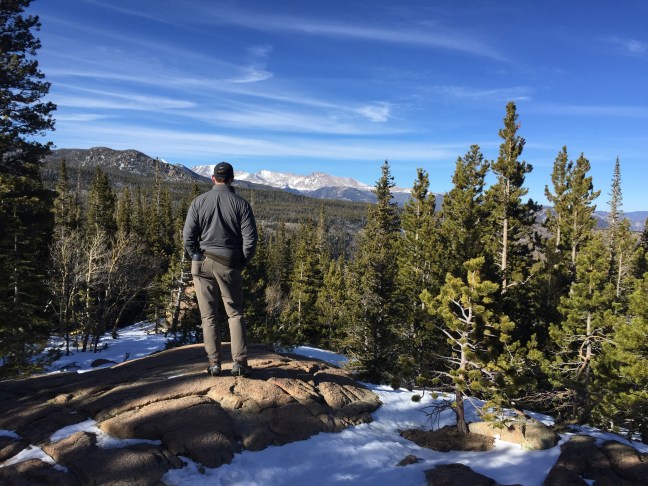
Last week my wife and I were in the Rocky Mountains hiking through 40 inches of snow. There was a moment on top of a peak that allowed the scenery to open up in front of you that all I could think about was the fact that a single God created everything. Not only did He create everything we see, know, and believe in… but He created it all with excellence regardless of whether that particular creation would ever be seen or admired. It blows my mind! There isn’t a place on or off Earth that you could go and find a halfway created tree, or a “good enough” rainbow. It’s all magnificent! God doesn’t do anything adequately… only excellently.

IMG_6489

Sometimes, the best way to break out of a rut, whether it’s a spiritual rut or creative rut, is to get out of your comfort zone and explore a new facet of what it means to worship God. We serve a creative God, and He calls us to worship Him with all we are, including the creativity He’s given us.

1 Corinthians 10:31 tells us that,

Whether you eat or drink or whatever you do, do it all for the glory of God.

Our connection with God comes not from WHAT we do in worship but rather HOW we do it. We can read 10 chapters of the Bible and our hearts still be far from God, or we can wash our car in the driveway and have a wonderful time of fellowship with Him!

I love this quote about a lifestyle of worship from Martin Luther King Jr. He once said,

If a man is called to be a street sweeper, he should sweep streets even as a Michelangelo painted, or Beethoven composed music or Shakespeare wrote poetry. He should sweep streets so well that all the hosts of heaven and earth will pause to say, “Here lived a great street sweeper who did his job well.”

Whether you sing a hymn or wash dishes is not as important as whether or not your heart is tuned in to the presence of God. As humans, we have the unique privilege to worship God with our entire beings, heart, soul, mind, and strength. Let’s learn to do so well!

If you want to go deeper in your relationship with God perhaps it’s time to explore new ways of worshipping Him, and check your attitude at the door. I’ll say it again… it’s not about what you do, your role, or your position. It’s about HOW you approach the throne.

Are you approaching God with the desire to worship and to worship excellently, or are you approaching to heap your meaningless statements and love songs at the foot of the throne half-heartedly?

Contrary to popular belief, God did not create us all to worship Him the same way. We’re different not just in our physical appearance and spiritual giftedness but also in the way we connect with God. And it’s a beautiful thing. One body, many parts, right? So stop trying to mimic someone else’s spiritual walk and discover the way God created YOU to connect with Him.

Your worship journey will be as rich, deep, and varied as you desire it to be. Start worshipping with the idea of excellence in mind. Worship throughout your lifestyle and your day and see how the rut fades!

Fight or Flight – The Story of Your Life

Psalm 45:1 says,

My heart overflows with a pleasing theme; I address my verses to the king; my tongue is like the pen of a ready scribe.

What would you like the story of your life to look like? What is the theme of your heart and the story of your tongue?

I watched a man chiseling on a rock once while I was in college. After a bit he turned and I asked him what he was making. He replied, “The state of Kentucky!” The rock looked nothing like the state of Kentucky… in fact it looked more like a log. He then said something that I have remembered and thought about since. He said, “It may not look like it now, but the state of Kentucky is in there… I just have to get it out!”

What an idea! The artist knew that what he wanted was attainable, but it just was going to take some effort to get it exposed.

I am a perfectionist, which often restricts me as an artist. I get frustrated when what I have on canvas or paper doesn’t match what I had in mind in my head. That frustration restricts my ability to be artistic, whereas I watch my wife work, whether it is drawing or painting, she allows the work to transform throughout the process. Like a sculptor allowing the piece to take form with every hit from the chisel bit. She has a way of allowing a piece to take shape itself, and you are able to watch it take shape and detail as it transforms and evolves throughout the process of her work.

The Psalmist gives a valuable reminder that everyone has a “canvas” on which to “paint” the story of his or her life. If you were to paint yours, what would picture you create? The story of your life is determined by the overflow of your heart. Are you like me as an artist? Do you get frustrated and want to throw in the towel when the story you had in mind from the start isn’t taking shape just right? Or are you like my wife or the sculptor I mentioned above? Do you allow the story and art to unfold and transform as you pour yourself into it and work?

We must remember, transformation is always progressive, always changing and moving forward.

The Apostle Paul knew all about transformation first-hand. From murderer of Christians to Apostle of the Church, the canvas of his life underwent radical change. In Philippians 3:12-14 he admitted,

Not that I have already attained, or am already perfected; but I press on, that I may lay hold of that for which Christ Jesus has also laid hold of me. Brethren, I do not count myself to have apprehended; but one thing I do, forgetting those things which are behind and reaching forward to those things which are ahead, I press toward the goal for the prize of the upward call of God in Christ Jesus.

Paul was well aware that he had some changing still to do but he understood that it wasn’t about perfection, qualifications or credentials; it was about Christ’s righteousness. He was committed to pressing toward the goal of transformation into Christ’s image.

Paul didn’t allow the first chapters of the story to determine the ending.

Paul refused to flee from the struggle and suffering involved with change. He was passionate for the Cause of Christ and his passion oftentimes involved pain… sometimes the change doesn’t come naturally but instead it takes work! In fact, the Latin word for passion means pain.

1 Timothy 6:12 says,

Fight the good fight of the faith. Take hold of the eternal life to which you were called and about which you made the good confession in the presence of many witnesses.

In our fight for change, we must realize that a certain degree of pain and work is involved. Putting to death the old ways of thinking, feeling and behaving is uncomfortable at best, and often painful! Don’t be passive, but instead be committed to pressing on.

Life is filled with situations where we are faced with a “fight or flight” decision. If you run, you’ll have to face the same fight again. You want to change your life? You have to fight for it. But take heart – you are in good company!

Be like Paul. Be like the sculptor we discussed above. Live righteously and know that what God wants for you is attainable, but it just might take some effort to get it exposed!

Safety in Numbers

Do you like scary or suspenseful movies? I do… but my wife just can’t watch them. I always try to convince her to watch them by telling her why they aren’t scary and how you can predict everything that is going to happen from the start. How predictable are they? A group of young adults venture off into the woods… maybe they find a cabin? They begin to do their own things… breaking off in groups, making poor decisions, etc. Then like clockwork one ventures off alone because they have to go to the restroom or they heard a mysterious noise and BLAM they are got.

Like in a scary movie there are times when being alone is dangerous. We as human beings are the most vulnerable physically, mentally, emotionally, and spiritually when we are isolated and alone. Statistics back this up! Most people who are victims of a violent attack or encounter were singled out because they were vulnerable and alone.

You are most vulnerable when you are alone.

I chuckle every time I think back to a story a friend of mine told me about when he first moved out of his parents house and into his own home. He was excited to be out on his own and to begin to set up the place where he would start his family. Shortly after moving in by himself he had a scary moment where he began to choke on a piece of food that he had scarfed down. The panic truly began to set in when he started struggling to breathe and then realized where he was… in his own house… all alone! What a way to go! He ran around the home desperately trying to cough up the food and finally had to resort to hurling himself down on a kitchen chair in a makeshift Heimlich maneuver to dislodge the food from his throat.

As funny as that situation is now, it definitely wasn’t then and it could’ve been even more serious if he had lost consciousness.

How much easier would that whole situation have been if there had been someone else there to help my friend? A person he could trust to take care of him in times of weakness or distress. Not only were we as humans, and Christians, created to be in community but we also need community. There is safety in numbers.

This week we continue our discussion on the importance of developing and maintaining a faith community to be part of and invested in.

I like to hike, and a few of the places I enjoy hiking have the potential of putting you in the same area of a bear or two. I never worry about it too much because I have a partner, my wife, that I typically hike with. When we are together we make more noise and allow more time for a bear to avoid being startled by us… therefore making us safer together.

Though there aren’t bears out there in everyday life, there are other things that pull at us and seek to destroy us physically, spiritually, and emotionally. False theology abounds at every turn. Satan and his legions try to distract us with temptations. Our own sin leads us astray. We need Godly brothers and sisters to watch our back. Like a “band of brothers” that collide in a war zone and are tasked with completing a mission and keeping each other alive, we too need to be connected in community where we can all be on alert together for the dangers that are all around us. Now we know we are never entirely “safe” form sin… but safety does come with accountability to another. Safety is greater in numbers.

The truth is, we need each other. We need to trust, rely on, and depend upon other believers. God gave us each other to walk alongside, encourage, and spur one another one in the faith. The writer to the Hebrews says in Hebrews 10:24-25,

And let us consider how to stir up one another to love and good works, not neglecting to meet together, as is the habit of some, but encouraging one another, and all the more as you see the Day drawing near.

James 5:16 says,

Therefore, confess your sins to one another and pray for one another, that you may be healed. The prayer of a righteous person has great power as it is working.

So… despite the fact that running into a bear could be a possibility I hike anyways. I am safer with my wife by my side… watching my back while I watch hers. The same can be said about Christians as well, we are safer together in the community of the Body of Christ than we are out there trying to “hike” on our own. Though society might tell us that we can do life on our own, God’s word tells us that we simply can’t function without each other (just read 1 Corinthians 12). We need each other and we need community!

Don’t allow yourself to be the soldier lost behind enemy lines all alone!

Instead live out Galatians 6:2 where it says,

Bear one another’s burdens, and so fulfill the law of Christ.

Join a community that fights for each other, protects each other, and takes care of each other. Romans 12:13 says,

Contribute to the needs of the saints and seek to show hospitality.

Hebrews 13:16 says,

Do not neglect to do good and to share what you have, for such sacrifices are pleasing to God.

Like a battle buddy or hiking partner your community can warn you of dangers ahead… or even better, of dangers within. 1 Thessalonians 5:14 says,

And we urge you, brothers, admonish the idle, encourage the fainthearted, help the weak, be patient with them all.

Are you safe? Could you be safer? If you aren’t currently in community with other Believers then you definitely aren’t as safe as you could be. Don’t open yourself up to attacks from the evil one; instead surround yourself with soldiers fighting for the same army as you!

There is safety in numbers.

The Importance of a Faith Community

This week we are beginning a look at Christian community and why it is vital to our lives as Believers. We will continue on with several installments in the weeks to come.


We once were a society that centered around family. Multiple generations often lived together under one roof, and when families did live separately they never moved very far. Small town living was real and kids moved in just down the street from the homes they grew up in. In my head I visualize the fictional community of Mayberry, North Carolina, where the 60’s TV show Andy Griffith was set.

Unfortunately, the day and age of Mayberry are gone. These days, we are more of an individualistic culture. We rely on ourselves. We live far away from where we were raised. Our connections with other people take place most often in the workplace, and deep sincere lasting friendships are pushed aside by fickle, and short-lived online connections and social media followers.

In the church, we see this sense of individualism and disconnectedness as well. Many people “date” churches, never staying in one place very long. Whether it’s a commitment issue or something else… who’s to say? Some may claim a “home church” but are rarely seen outside of an occasional Sunday morning worship service when they don’t have something “better” going on. And then there are those who may indeed have a committed relationship with a particular church but they are not “sold out” or all in. They are involved but withholding. They don’t rely on the Body when they are struggling or in need. Instead, they wear masks that cover the pain of their lives, pretending that everything’s okay, even though it’s not. They like the idea of community but maybe not the application so much.

Yet individualism and doing life on our own is not part of God’s design. After all, God is a community in himself. Existing for all of eternity past, God the Father, God the Son, and God the Holy Spirit have enjoyed the love and fellowship of their perfect triune community. In creating mankind, God desired for us to participate in that community.

In the book “Whiter Than Snow: Meditations on Sin and Mercy” Paul Tripp says,

We weren’t created to be independent, autonomous, or self-sufficient. We were made to live in a humble, worshipful, and loving dependency upon God and in a loving and humble interdependency with others. Our lives were designed to be community projects. Yet, the foolishness of sin tells us that we have all that we need within ourselves. So we settle for relationships that never go beneath the casual. We defend ourselves when the people around us point out a weakness or a wrong. We hold our struggles within, not taking advantage of the resources God has given us.

But God didn’t create man to be in community with him alone. After he created the world and Adam, God created human community or personal human relationships. In Genesis 2:18 God said,

It is not good that the man should be alone; I will make him a helper fit for him.

God created man and woman to be in community together, to create families and live together, bearing the image of and reflecting the three-in-one God. Scripture is all about community. God chose the Israelites to be his people. We see that in Leviticus 26:12,

And I will walk among you and will be your God, and you shall be my people.

They lived and worshipped him together in community. Following the death, resurrection, and ascension of Christ, God then instituted the church, the Body of Christ as a community of believers.

1 Corinthians 12:27 says,

Now you are the body of Christ and individually members of it.

The biblical ideal of community challenges us to commit ourselves to life together as the people of God. Christian community is the place of our continuing conversion. Its goal is that, individually and together, we should become mature, able to stand tall and straight, embodying the very “fullness of Christ” talked about in Ephesians 4:11-16,

And he gave the apostles, the prophets, the evangelists, the shepherds and teachers, to equip the saints for the work of ministry, for building up the body of Christ, until we all attain to the unity of the faith and of the knowledge of the Son of God, to mature manhood, to the measure of the stature of the fullness of Christ, so that we may no longer be children, tossed to and fro by the waves and carried about by every wind of doctrine, by human cunning, by craftiness in deceitful schemes. Rather, speaking the truth in love, we are to grow up in every way into him who is the head, into Christ, from whom the whole body, joined and held together by every joint with which it is equipped, when each part is working properly, makes the body grow so that it builds itself up in love.

We know all too well that maturity takes time. We know less well that it also takes our brothers and sisters in Christ. It’s a process that is revealed throughout the language of the New Testament. We see this process described in the “each other” language… Love one another, forgive each other, regard each other more highly than yourselves, teach and correct each other, encourage each other, pray for each other, and bear each other’s burdens, be friends with one another, be kind to each other, compassionate, and generous in hospitality, serve one another and submit to one another out of reverence for Christ. Get the idea? This list just scratches the surface, but it is enough to remind us that we need a faith community in our lives.

To disconnect oneself from faith community is like a leaf believing it would thrive better off the branch that is rooted to the earth were it ultimately draws sustenance from.


What does your faith community look like? Next week we will continue our series on “community” by looking at some specific aspects and advantages to living in a healthy faith community.